November 6, 2026 · Quality
Checking the answer is now the expensive part
We spent three years making generation cheap. We have not made checking cheap, and checking is the thing that decides whether the output is worth anything.
A supplier sent us a spec sheet in Chinese last spring. We ran it through a translation tool, skimmed the English, and sent it to a buyer in Rotterdam. Two weeks later the buyer asked why the mounting brackets were stainless steel when the drawing called for hot-dip galvanised.
The translation was fluent. It was also wrong in a way that no amount of reading fluency would have caught, because "不锈钢" and "镀锌" are not near-misses — they are different materials with different corrosion behaviour and a 30% price gap. The sentence read perfectly. The part would have rusted.
That is the shape of the problem now. Producing a plausible sentence costs almost nothing. Knowing whether the sentence is true still costs a person an afternoon.
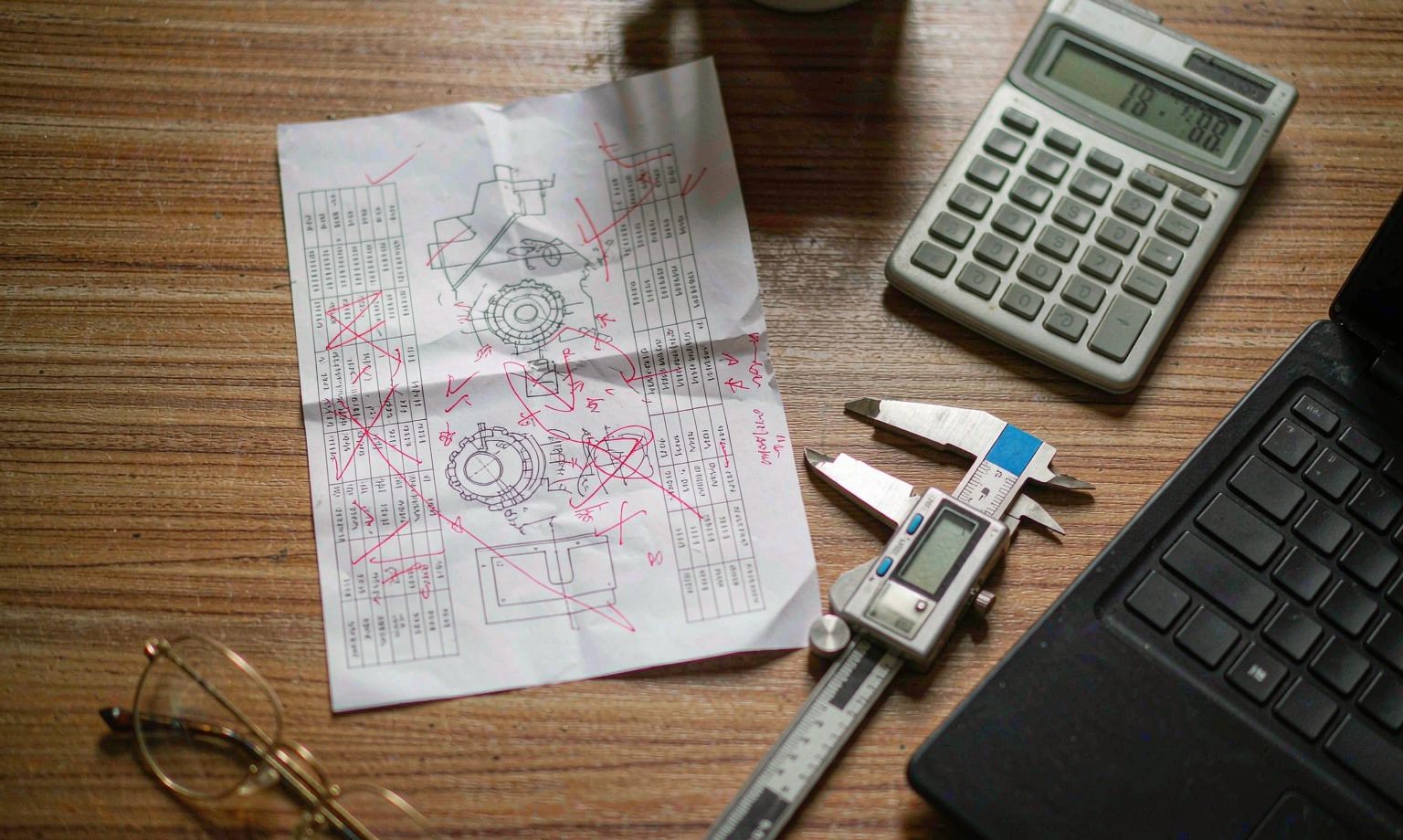
The asymmetry nobody budgets for
Every AI tool sold to an export team is priced on the production side. Generations, tokens, seats, documents. Nobody sells verification, because verification is the part that requires knowing what the answer should have been.
So teams measure the wrong thing. They count hours saved on drafting, and quietly absorb the hours spent checking, because checking is spread across three people and does not appear on any invoice. The saving is visible. The cost is diffuse. That is a very comfortable arrangement for a vendor and a very expensive one for a buyer.
This week a startup called Axiom Math said out loud what the research side has known for a while: AI is now producing mathematics that looks correct and is not, and someone has to check it. Their pitch is not a better model. It is a verification layer. Whatever you think of the company, the diagnosis is right, and it applies well beyond proofs.
The same week, OpenAI shipped a cybersecurity model and the immediate question in the coverage was whether a model is enough — because security work is almost entirely verification. And Anthropic said it is building a way to prove which model produced a given output, which is the same problem one layer down: if you cannot establish provenance, you cannot audit anything.
Three announcements, one subject. The bottleneck moved.
Where this costs an export desk real money
Generation errors are annoying. Verification errors are customs events. Four places we see it repeatedly:
- HS classification. A model will assign a tariff code with total confidence. A wrong code is not a typo; it is duty, delay, and in some jurisdictions a penalty. Nobody should accept a code without a second source and a broker's eye.
- Specification translation. As above. Materials, tolerances, finishes, and units all have words that translate cleanly and mean different things.
- Compliance citations. Standards get superseded. A model trained on older text will cite a withdrawn EN standard with a perfectly formatted reference. The format is the trap.
- Supplier claims in a quote. An agent summarising a factory's email will smooth over the hedge — "usually 25 days" becomes "25 days" — and the hedge was the important part.
Notice that none of these are cases where the AI is bad. They are cases where being 95% right is worse than being obviously wrong, because obviously wrong gets caught.
A wrong answer that looks wrong costs you five minutes. A wrong answer that looks right costs you a container.
What actually makes checking cheaper
The useful question about any tool is not "how fast does it write". It is "does it make the review shorter". Most do not. A few things do:
Citations that point at the source line. Not a link to a document — a link to the clause. If the tool cannot show where a claim came from, the reviewer is re-doing the work from scratch, and the time saving was an illusion.
Diffs rather than rewrites. A translation that shows what changed between the source and the output lets a reviewer scan for material changes in seconds. A clean paragraph gives them nothing to scan.
Refusals that are loud. A tool that says "I cannot verify this tolerance" is more valuable than one that guesses, because it moves the work to the person who should have done it.
A stable output for the same input. If the same document produces different answers on Tuesday and Thursday, every review starts from zero. Consistency is not a quality feature, it is a verification feature.
We have started scoring tools on this axis separately from output quality, because they come apart constantly. Some of the best-writing tools are the worst to review, and a couple of the dullest are the fastest to sign off.
Provenance is the next invoice
Anthropic's identity work points at where this goes. Once a meaningful share of documents passing through a trading company were touched by a model somewhere, "which model, which version, which prompt" stops being a technical curiosity and becomes a question a customs auditor or a customer's QA team can ask.
The companies that will handle that well are the ones keeping a log now — not because a regulator demands it, but because it is the only way to answer "why did we ship that" six months later.

The rule we use
Anything that leaves the building gets a name on it and a second source behind it. Not a signature on the whole document — a name next to the specific claim that could cost money if it is wrong: the HS code, the material, the standard, the lead time.
That rule costs us maybe two hours a week. It has caught three material errors this year, one of which would have been a re-shipment.
The tools are still worth using. They just are not where the value is created. The value is created in the ten minutes after, by the person who knows what the answer should have been — and that ten minutes is the part nobody is selling you.
We test every tool in the library on a document with a planted error: one wrong material, one superseded standard, one hedged lead time. A tool that flags all three is worth paying for. A tool that rewrites them fluently is not.