November 9, 2026 · Operations
The humanoid robot pitch is a spreadsheet, not a demo
Agility went public with $174,000 of revenue and a $362 million loss. The useful number in the filing is not the robot's dexterity — it is what a customer has to spend to find out whether it works.
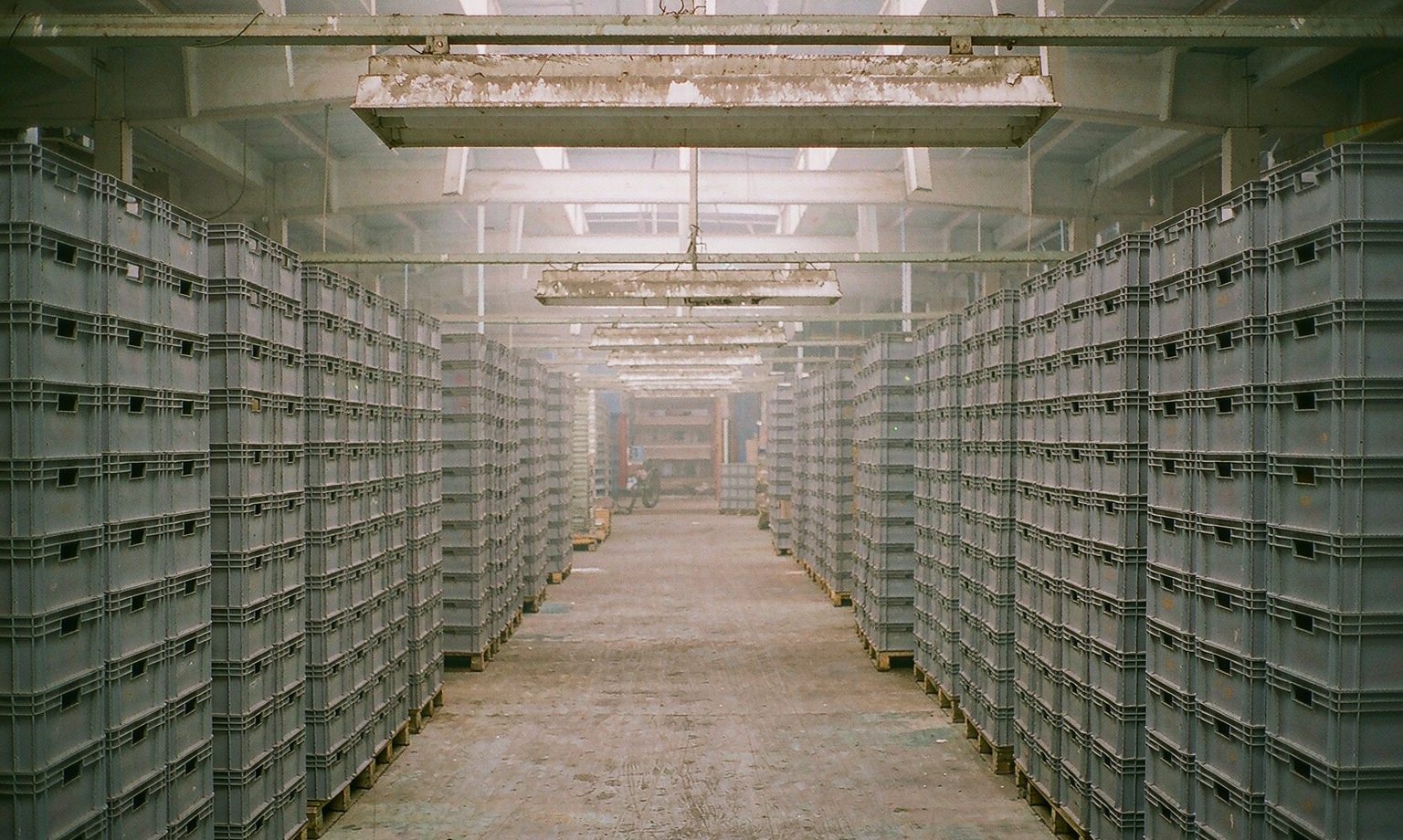
Somewhere in a GXO warehouse, a robot has moved more than 100,000 totes. That is the most convincing sentence in the humanoid industry, and it is also the only one that arrives with an invoice attached.
On Thursday Agility Robotics became the first pure-play humanoid company on public markets, through a reverse merger that raises $465 million. The same set of numbers shows $174,000 of revenue in the first half of 2026 — much of it from related parties — against a $362 million loss. Read those together and you have the actual state of the category: real work, tiny revenue, enormous burn.
None of that makes the robots fake. It makes them early. And for anyone who runs a warehouse, the stock story is less relevant than a narrower question: what does it cost to find out whether one of these works in your building?
The half-million-dollar question
To move from a demonstration to a deployment, a customer reportedly spends $500,000 on an on-site proof of concept. That figure is the most useful data point in the announcement, because it filters the market for you. If you cannot put half a million dollars against a hypothesis, you are not the customer yet. You are a lead.
It also tells you what kind of sale this is. Nobody spends that money to run a pilot for the photographs. They spend it because a specific lane has a specific problem: night-shift turnover, injury claims on 50-pound lifts, a customer contract that penalises late picks.
What the numbers actually claim
The pitch is $100,000 a year saved per robot under a robot-as-a-service contract, more if you buy outright. Treat that as a ceiling rather than a forecast. It assumes the robot works the shifts you need, at the rate you need, without a person standing next to it.
Published capability is 98% placement accuracy. Two percent sounds excellent until you price it. At a thousand placements a shift, that is twenty mistakes a shift, and somebody has to find and fix them. Ask where the errors land — on your cheapest SKU or your most fragile one — and ask what the recovery path costs.
The parts the brochure skips
Uptime at your throughput. Not mean time between failures on a test bench, but hours of useful work per day in your aisle. A robot that runs twenty hours at seventy percent of human speed is a different purchase from one that runs sixteen hours at ninety-five.
Charging. Every hour on a charger is an hour of labour you still have to staff. If the shift pattern does not leave a window for it, the robot is a part-time employee with a very large onboarding cost.
Working near people. The current generation mostly operates inside a cell or a cage. The next one is sold on sharing space with people, which changes your insurance and your risk assessment, not just the spec sheet.
Maintenance and spares. Who holds the parts, what the response time is, and what happens when a joint fails on a Friday night with a trailer waiting.
The exit. Can you return it, is the contract annual, and what does the building need — floor flatness, Wi-Fi coverage, aisle width — that you would have to pay for before the robot arrives.
Why the proof-of-concept fee is the story
Industrial automation used to sell on payback periods you could model in a spreadsheet. Humanoids are selling on a promise that the next model will be more capable, and the proof-of-concept fee is how the industry bridges the gap: the customer pays to generate the evidence.
That is not unreasonable. Real deployments produce real data, and Agility says it holds 65,000 hours of it from live facilities. But it does mean the burden of proof sits with you rather than the vendor. Budget for it as research, not as a purchase, and decide in advance what result would make you walk away.
If you are actually considering one
Pick one lane. The dullest, heaviest, most repetitive lane you have, with a stable layout and almost no exceptions. Measure it by hand for two weeks first. You cannot compare a robot against a process you have never timed.
Then write down the only number that matters: cost per tote moved, all in, including the supervisor attention the machine will absorb in its first year. If the vendor's model cannot survive that comparison, a better demo will not rescue it.
The robots are coming, slowly, one tote at a time. The companies that do well over the next three years will not be the ones with the best video. They will be the ones whose customers can do arithmetic.
We publish the pricing model, minimum commitment and export-readiness notes for every tool in the library, and we flag it when a vendor changes one without changing the headline price.